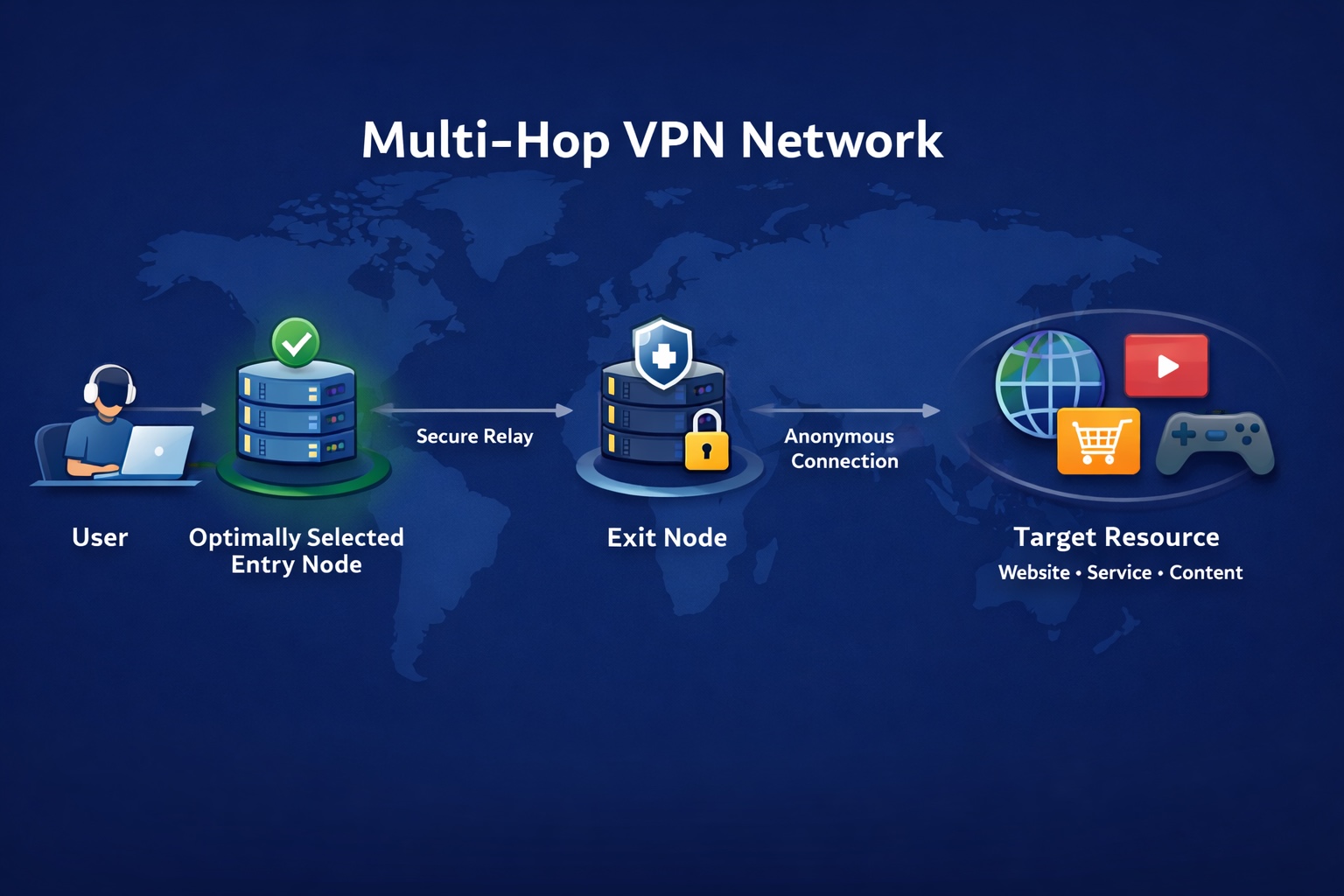
Sivor Veyron
VPNs are no longer niche tools used only by technical users. They have become part of everyday internet use for many people, not because the internet is broken, but because it has become more complex. Online tracking is more detailed than it used to be. Public Wi-Fi is used more often. Streaming services and prices change depending on location. Remote work means people stay connected for long hours, often on networks they do not fully control.
In this environment, a VPN is best understood as a network-layer protection and management tool. It helps reduce unnecessary exposure, makes public connections safer, and gives users more control over how and where their traffic appears to come from. It does not make someone anonymous, and it does not replace good security habits, but it can meaningfully improve everyday online experience when used consistently.
This article focuses on three questions:
- Why people in the US and across the English-speaking internet commonly use VPNs today.
- What actually makes a VPN suitable for long-term, everyday use.
- How to think about choosing between five well-known VPNs—ExpressVPN, NordVPN, Surfshark, Proton VPN, and Surflare—based on real needs rather than marketing claims.
The goal is not to crown a single “best” VPN for everyone, but to explain the trade-offs clearly so readers can make a decision that fits how they actually use the internet.
Why do people use a VPN?
Most people start using a VPN because something feels inconvenient, unsafe, or unnecessarily exposed. Those moments tend to fall into a few recurring patterns.
1. Online tracking by ISPs and data brokers
Online tracking today is usually legal, widespread, and invisible. Internet service providers can see metadata such as which domains are accessed and when connections occur. Data brokers collect and combine information from many sources to build detailed profiles that feed advertising and analytics systems.
This does not usually mean someone is reading private messages, but it does mean browsing behavior is easier to associate with a specific household, location, or long-term network identity. Over time, this creates a detailed and persistent picture of how someone uses the internet.
A VPN does not eliminate tracking entirely. Browser fingerprints, logged-in accounts, and cookies still matter. What a VPN does is reduce network-level identifiability. Traffic is routed through the VPN provider’s servers, so websites and intermediaries see the VPN’s exit point rather than the user’s home IP. This breaks the direct link between everyday browsing and a single, fixed network identity.
For many people, that reduction alone is valuable. It does not change how they browse, but it limits how easily behavior can be aggregated over time.
2. Public Wi-Fi security
Public Wi-Fi is convenient, but it is also difficult to evaluate. Airports, hotels, cafés, campuses, and shared workspaces all offer open networks, yet users rarely know how those networks are configured or who else is connected to them.
Even with HTTPS, risks remain. Fake hotspots, misconfigured routers, and network-level interference are real possibilities, especially when devices frequently connect and reconnect while traveling or working on the move.
A VPN creates an encrypted tunnel between the device and the VPN server. This means that even if the local network is untrusted, the traffic passing through it is much harder to inspect or interfere with. The VPN does not make the network perfect, but it significantly reduces exposure during transit, which is often where public Wi-Fi is weakest.
For people who travel, work remotely, or regularly rely on shared networks, this added protection is practical rather than theoretical.
3. Streaming access and location-based availability
Streaming services vary by region. Libraries, features, and even app behavior can change depending on where a user appears to be located. When traveling or moving between regions, these differences become noticeable.
A VPN allows users to change their apparent location, which can help maintain a more consistent experience when accessing streaming services. The goal for most users is not novelty or exclusivity, but continuity—being able to use familiar services without unexpected restrictions.
What matters most here is not whether a VPN can unlock every platform once, but whether it works reliably over time. Services actively block known VPN traffic, so a VPN that requires constant server switching quickly becomes frustrating. Stability and low maintenance are far more important than headline claims.
4. Regional pricing and comparison shopping
Prices for flights, hotels, subscriptions, and digital services can vary by region, currency, and market. In some cases, browsing history and location influence what is shown.
A VPN does not guarantee lower prices, but it can serve as a comparison tool. By checking prices from different regions, users gain more context about how pricing is structured. Combined with clearing cookies or using private browsing, this can help people make more informed decisions.
In this role, a VPN is not a shortcut, but an information tool that reduces blind spots in online pricing.
5. P2P use and privacy separation
Peer-to-peer traffic is not inherently illegal, but it is more visible at the network level. In environments where copyright enforcement mechanisms are active, traffic can be easily associated with a specific IP address.
A VPN adds a layer of separation between activity and a personal connection. This does not change legal responsibilities, but it does reduce how directly certain activities are tied to an individual’s network identity.
What matters most here is transparency. Users need to know whether P2P is allowed, whether bandwidth is limited, and whether any restrictions are clearly stated. Problems often arise not from prohibition, but from unclear or hidden rules.
6. Remote work and long-running connections
Remote work has changed how VPNs are used. For many people, a VPN is no longer something they turn on occasionally. It runs for hours at a time while they work, travel, attend calls, and move between networks.
In this context, peak speed matters less than predictability. Frequent disconnects, unstable behavior after sleep or network changes, or the need for manual intervention quickly erode trust. A VPN that cannot stay out of the way becomes a liability rather than a benefit.
For long-running use, stability and consistency are the core requirements.
What makes a VPN suitable for long-term use?
A VPN is not just software. It is a service that handles sensitive traffic. Choosing one requires evaluating how it behaves over time, not just what it claims to offer.
1. A clear and credible privacy policy
“No-logs” claims are common, but the details matter. A credible policy explains what is not collected, what may be collected for operational reasons, and why. Clear boundaries build trust more effectively than vague assurances.
Longevity matters here. Policies that remain consistent over years carry more weight than promises made by short-lived services.
2. Practical server coverage
Server count alone is not meaningful. What matters is whether servers are distributed where users actually need them, whether capacity is sufficient, and whether performance remains stable during peak times.
For everyday use, consistent local performance is more valuable than global reach that looks impressive on a map but delivers uneven results.
3. Reliable streaming support
Streaming support should be evaluated by maintenance cost, not just success rate. If a VPN requires frequent trial and error, the experience will not scale into daily use.
A suitable VPN minimizes friction and works predictably with major platforms.
4. Protection on unstable networks
Features like a kill switch, DNS leak protection, and sensible handling of untrusted networks matter most when something goes wrong. These are not advanced extras; they are part of baseline reliability.
The question to ask is simple: when the connection changes unexpectedly, does the VPN fail safely?
5. Transparent P2P and bandwidth policies
Support for P2P traffic should be clearly stated. Limits, throttling, and server restrictions should be easy to understand. Transparency reduces surprises and makes long-term use more predictable.
6. Multi-device support and usability
VPNs are used across phones, laptops, and sometimes shared household devices. Stable apps, clear interfaces, and minimal configuration requirements increase the likelihood that the VPN will actually stay enabled.
A VPN that is too complex often ends up unused.
7. Pricing clarity and long-term value
Short-term discounts are common, but long-term value depends on transparent pricing, clear renewal terms, and a reasonable refund policy. Many VPN issues only appear after extended use, so the ability to test the service in real conditions matters.
Best VPNs for the USA: Five VPNs Worth Considering
(ExpressVPN, NordVPN, Surfshark, Proton VPN, Surflare)
Now we move to the recommendation section. Before listing any names, it is worth stating the principle behind this part of the article.
Every VPN included here is recommended for a specific reason. Each one fits a certain type of user, solves a particular set of problems well, and comes with trade-offs that should be understood upfront. This approach is intentional. A recommendation only makes sense if it explains who a product is for, why it fits that group, and what you give up by choosing it. Without that context, a list of brands is not analysis—it is just branding.
1. ExpressVPN: For users who want simplicity and low learning cost
In the US market, ExpressVPN’s main strength is not a single standout feature, but the overall feeling of ease. Its value lies in how little effort it asks from the user. You do not need to understand networking terms, adjust many settings, or constantly check whether the connection is behaving as expected. You turn it on, and it generally works the way you expect it to.
This matters more than it may seem. A VPN only provides real value when it is used consistently. If a tool feels confusing, fragile, or demanding, many people eventually stop using it, even if they understand its benefits. ExpressVPN appeals to users who want the VPN to behave like a reliable switch rather than a system they have to manage.
Users who tend to choose ExpressVPN usually share a few characteristics. They care about consistent behavior across devices. They value smooth day-to-day use more than advanced configuration. And they prefer not to spend time diagnosing connection issues or tweaking options.
That same simplicity also defines its limits. If you enjoy fine-grained control, protocol-level decisions, or deep customization, ExpressVPN may feel restrictive. But for most everyday users, that restraint is not a weakness. It is what makes long-term use realistic.
Best suited for: beginners, travelers, households, users who want low maintenance
Trade-off: a more general-purpose experience rather than deep customization for niche scenarios
2. NordVPN: For users who value security features and are comfortable with complexity
NordVPN places more emphasis on security tooling and feature depth. It is often chosen by users who want more than just a basic encrypted tunnel and who are willing to interact with a more complex product in exchange for greater control.
This type of user tends to be more sensitive to privacy and security details and is comfortable spending some time understanding how a product works. They often prefer having options available, even if they do not use all of them every day. For people who want to feel that they can actively manage how their VPN behaves, NordVPN’s approach is appealing.
From a long-term perspective, NordVPN usually performs well across several practical criteria: stable performance, broad server coverage, workable streaming support, and solid multi-device usability. Once configured, many users leave it running during work sessions without major disruption.
The trade-off is friction. More features mean more decisions, and more decisions mean more chances to feel overwhelmed or disengaged. For users who only want a VPN that stays quietly in the background, this extra complexity may not translate into extra value.
Best suited for: security-conscious users, power users, people who want more control
Trade-off: higher complexity, not always ideal for “set it and forget it” use
3. Surfshark: For budget-conscious users with many devices
Surfshark’s most practical advantage is how well it fits a multi-device lifestyle. Many people do not use a VPN on just one device. They use it across phones, laptops, tablets, and sometimes shared family devices. As the number of endpoints grows, both cost and management overhead increase.
Surfshark addresses this reality by making it easier to treat a VPN as shared infrastructure rather than a personal tool. Its pricing and device policy make it appealing to households or users who want one solution that covers everything without constant account juggling.
The typical Surfshark user is not chasing the best possible performance in a single edge case. Instead, they want reasonable speeds, acceptable reliability, and broad coverage across daily scenarios such as browsing, streaming, and public Wi-Fi use. In that role, Surfshark generally performs well.
The trade-off is focus. A value-oriented approach usually means the product aims to be “good enough in most places” rather than deeply optimized for a specific scenario. Users who demand extreme consistency or highly specialized behavior may prefer a more infrastructure-focused service.
Best suited for: families, users with many devices, budget-sensitive users
Trade-off: emphasis on broad coverage rather than maximum consistency in every edge case
4. Proton VPN: For users who prioritize trust and transparency above all else
Proton VPN appeals most strongly to users who see a VPN as a trust relationship rather than a convenience tool. For these users, the central question is not speed or feature count, but who they are trusting with their traffic and whether that trust is justified over the long term.
This group tends to value clear rules, transparent policies, and consistency in how a service presents itself. They are often less interested in flashy features and more concerned with whether the provider’s values and practices align with their expectations around privacy.
Because of this focus, Proton VPN is often chosen by people who think long-term. They understand that a VPN is not a one-time purchase but an ongoing relationship, and they are willing to accept certain limitations in exchange for greater confidence in the service’s intentions.
The trade-off is practical. A product that prioritizes trust and transparency may not always push aggressively into entertainment-driven use cases or optimization tricks. If your primary goal is seamless access to every streaming platform at all times, you may look elsewhere. If your primary goal is confidence in who you are trusting, Proton VPN’s positioning makes sense.
Best suited for: privacy-first users, people who value transparency and long-term trust
Trade-off: less emphasis on aggressive optimization for entertainment use cases
5. Surflare: For users who care about long-term stability and predictable performance
In this US-focused article, Surflare does not need to compete for the same mental space as the largest consumer brands. Its strength lies in a different dimension: stable, predictable behavior during long-term, everyday use. This may sound unremarkable, but for people who rely on a VPN for work, travel, or extended sessions, it is often the most important quality.
Many users stop using VPNs not because they no longer need them, but because the experience becomes unreliable. Unexpected disconnects, problems when switching networks, or the need to manually intervene at inconvenient times all undermine trust. Once a VPN becomes a source of uncertainty, users tend to turn it off—and a VPN that is turned off provides no protection at all.
Surflare’s recommendation rests on three practical considerations.
- First, long-term operational stability. A service that has run consistently over many years has already been tested by real-world conditions, not just marketing promises. For trust-based tools, time is a meaningful signal.
- Second, its origins in professional and business-oriented use cases. Products designed with work environments in mind tend to prioritize connection stability, latency consistency, and predictable failure behavior. This aligns well with modern remote and mobile work patterns, where users expect their tools to behave reliably across changing networks.
- Third, a cautious approach to capacity and bandwidth management. Rather than overpromising peak speeds, Surflare emphasizes consistent performance without throttling. For users who keep a VPN on throughout the day, this kind of consistency is more valuable than impressive but occasional speed test results.
- Surflare also includes application-aware traffic handling, which is best understood not as a technical feature, but as a way to reduce user effort. When common applications remain responsive without manual configuration, the VPN fades into the background—exactly where many users want it.
It is worth noting what is intentionally not emphasized here. Features such as residential IPs or specialized obfuscation techniques are better discussed in separate, professional-use articles. Including them in a general US-focused guide would shift the conversation toward niche scenarios and weaken the neutral, educational tone of this piece.
Best suited for: remote work, frequent travel, always-on VPN users, people who value predictability
Trade-off: prioritizes consistency over feature-heavy experimentation
Quick Comparison: Which VPN Fits Different Usage Styles?
| VPN | Best suited for | Key strengths | Trade-offs to consider |
|---|---|---|---|
| ExpressVPN | Users who want a simple, low-maintenance experience | Easy to use, consistent behavior, minimal setup across devices | Limited customization for advanced users |
| NordVPN | Users who want more security features and control | Broader security toolkit, flexible configuration options | More complexity, higher learning cost |
| Surfshark | Households and users with many devices | Good value, wide device coverage, practical pricing | Focuses on breadth rather than extreme optimization |
| Proton VPN | Users who prioritize trust and transparency | Clear privacy stance, strong credibility, long-term trust focus | May not prioritize entertainment-driven use cases |
| Surflare | Long-term users, remote work, always-on VPN usage | Stable connections, predictable behavior, no bandwidth throttling | Not focused on feature-heavy customization |
A practical decision checklist
- Identify your primary reason for using a VPN. Privacy, public Wi-Fi, streaming consistency, price comparison, P2P privacy, or remote work all point to different priorities.
- Filter options using the seven criteria above. This removes services that do not align with your actual needs.
- Do not rely on one-time speed tests. Long-term behavior under real conditions is what matters.
- If you expect to keep a VPN running most of the day, stability and predictability usually matter more than peak performance.
Final perspective
A VPN is most valuable when it becomes a quiet part of everyday internet use rather than a tool you constantly manage. The best choice is not the one with the loudest claims, but the one that fits your habits, tolerances, and expectations.
For users who need a VPN to stay connected reliably during long sessions, travel, and remote work, consistency is the defining feature. In that context, a service like Surflare becomes easier to appreciate—not because it promises everything, but because it focuses on doing a few important things well and predictably.
Frequently Asked Questions
Is using a VPN legal in the United States?
Yes. Using a VPN is legal in the United States and most other countries. A VPN is a privacy and security tool. However, it does not make illegal activities legal. Users are still responsible for following local laws and platform rules.
Does a VPN make me completely anonymous online?
No. A VPN reduces network-level exposure by hiding your IP address, but it does not eliminate all tracking. Browser fingerprints, logged-in accounts, cookies, and device behavior still matter. A VPN works best as part of a broader privacy setup.
Can a VPN help with streaming services?
A VPN can help access location-based streaming libraries, but reliability varies over time. Streaming platforms actively block VPN traffic. For most users, stable and low-maintenance access matters more than occasional success.
Is a free VPN good enough?
Free VPNs often come with limitations such as speed caps, data limits, or unclear data practices. For long-term daily use, a paid VPN with transparent policies and stable performance is usually a safer and more reliable option.
What matters more: speed or stability?
For short sessions, speed may feel important. For long-running connections, remote work, and travel, stability and predictable behavior usually matter more. A VPN that stays connected consistently provides more real-world value.
Looking for a VPN that stays reliable over long, everyday use?
If your main concern is not chasing the fastest speed test, but having a VPN you can keep on during work, travel, and public Wi-Fi without constant adjustments, Surflare is designed around that idea.
Its focus is predictable performance, stable connections across changing networks, and reducing the effort required to manage your VPN day to day.
- Built for long sessions: designed to remain stable during extended use, not just short tests.
- No artificial throttling: consistent performance instead of surprise slowdowns.
- Application-aware traffic handling: common apps continue to work smoothly without manual routing.
Choosing a VPN is about fit. If your priority is long-term stability and predictable behavior rather than feature volume, Surflare is worth evaluating alongside the options discussed above.