Part One: Microsoft's New Features
What is Edge Secure Network VPN?
According to the official Microsoft Edge features page, Edge Secure Network VPN is a built-in browser feature launched by Microsoft in collaboration with Cloudflare. The official Cloudflare statement indicates that this feature is based on Cloudflare's Privacy Proxy technology. Microsoft claims this feature can help users:
- Hide real IP address
- Encrypt browsing data to prevent eavesdropping by third parties
- Provide additional protection on public WiFi
- Prevent advertisers from tracking your online behavior
How to Enable?
The enabling process is quite simple:
- Open Microsoft Edge
- Click the menu in the upper right corner (···) → Settings
- Select Privacy, search, and services
- Find “Secure Network” and click “Get VPN for free”
- Log in with your Microsoft account
Overview of Important Parameters
| Parameter | Value |
|---|---|
| Free monthly traffic | 5GB |
| Traffic auto-reset | Monthly |
| Minimum latency | Automatically connects to the nearest geographical server |
| Server selection | No manual selection supported |
| Supported regions | Most markets (previously limited to the U.S.) |
| Is streaming encrypted | No (video sites excluded) |
Background of the Launch
The Edge Secure Network VPN feature underwent a significant upgrade in 2024. Microsoft initially offered 1GB of free monthly traffic in specific markets, which was expanded to 5GB in May 2024. This upgrade attracted attention and discussion in international tech media.
Part Two: The Gap Between Marketing and Reality
How Microsoft Promotes This Feature
Microsoft uses slogans such as “Using VPN technology” and “Free VPN data protection” in official channels. According to the official Microsoft Edge security features page, these phrases emphasize the privacy protection characteristics of the feature. For the average user, the term “VPN” is often associated with complete online privacy protection and anonymity.
But What Did Microsoft Say in Small Print?
According to the official Microsoft support document, Edge Secure Network VPN is described as a “basic protection” and stated that it is a built-in privacy feature of the browser, rather than a standalone VPN service. However, between marketing promotion and technical description, users may have different understandings—this is a common challenge in the marketing of technical products.
Part Three: The Technical Truth - It Is Not a VPN
Public Doubts from Privacy Security Experts
Sooraj Sathyanarayanan (@iAnonymous3000), a researcher and security strategist on the privacy and security team at Brave browser, published a detailed technical analysis on February 18, 2026, on the X platform. According to reports from Windows Latest and analysis from PBX Science, he pointed out the true characteristics of Edge Secure Network (Microsoft Edge Secure Network VPN):
“Edge Secure Network is not a VPN, but an HTTP CONNECT proxy based on the Cloudflare Privacy Proxy platform. It only establishes an encrypted tunnel within the Edge browser. All other applications in the system—DNS queries, email clients, background services, operating system updates—are completely exposed.”
This viewpoint has been deeply verified and reported by PCWorld and several international tech media, sparking widespread discussion in the global online privacy community.
Difference Between VPN and Proxy
To understand this difference, we need to grasp how VPNs and proxies work:
How Traditional VPN Works:
- Works at the operating system level
- Encrypts all traffic from your device
- Whether it's browser, email client, system updates, DNS queries—everything goes through the VPN tunnel
- Users have complete control over which country's server to connect to
How HTTP CONNECT Proxy Works:
- Works at the application level (only Edge browser)
- Only encrypts traffic generated by the browser
- Other applications, background services in the system are completely unprotected
- Automatically selects the nearest server, users cannot intervene
What Does This Mean?
When you enable Edge Secure Network VPN, the following traffic is protected:
- Websites you visit in the Edge browser
- Form data you enter in Edge
- Ad tracking within the Edge browser
This traffic is still exposed:
- Traffic from other browsers (Chrome, Firefox, etc.)
- Traffic from email clients (Outlook, Gmail app)
- System-level DNS queries
- Windows updates
- Background applications
- Network activity of the operating system itself
In simple terms: If you have both Edge and Chrome open, only Edge's traffic is encrypted, while Chrome is completely exposed on public WiFi.
Part Four: More Limitations
The Real Meaning Behind Traffic Limitations
5GB is the monthly limit, and this number may seem considerable, but it is quite tight for modern internet usage scenarios. According to internet usage statistics:
- Web browsing: Average news websites consume about 0.5-2MB, allowing browsing of about 2000-10000 pages
- Image browsing: A single scroll load on Instagram/Pinterest may consume 50-200MB
- Video streaming: According to official YouTube data, 720p quality video consumes about 1GB/hour, and 4K video consumes more
- Online meetings: official Zoom documentation shows that video calls consume about 0.5-2.5GB/hour
Based on this data, the 5GB monthly limit is quite limited for daily use.
Edge Secure Network VPN excludes high-traffic video sites like Netflix, Hulu, HBO from using the encrypted tunnel. The official explanation is to provide a better streaming experience. This design decision means that user traffic activity while watching streams is not protected by Edge Secure Network VPN.
No Server Selection
Edge Secure Network VPN automatically connects to the nearest Cloudflare data center. This has two consequences:
- Cannot unlock geo-restricted content: Want to watch your local streaming library abroad? Not possible.
- Privacy considerations: Cannot increase anonymity by changing virtual locations.
While connecting to nearby servers can reduce latency, this design is clearly not aimed at strong privacy protection but rather to provide a “good enough” user experience.
Part Five: Data Privacy Issues
How Do Microsoft and Cloudflare Handle Your Data?
According to relevant privacy documents:
- Data collected by Microsoft: The Microsoft Privacy Statement states that data is used for service diagnostics and improvement purposes, not shared with Cloudflare
- Data collected by Cloudflare: Data is used for anti-abuse monitoring and deleted after 25 hours
Using Edge Secure Network VPN requires logging in with a Microsoft account, which means Microsoft can associate these activities with your account identity.
Part Six: When Is It Useful? When Is It Not Enough?
Useful Scenarios for Edge Secure Network VPN
✅ Effective Scenarios:
- Quickly browsing news or checking emails on public WiFi
- Preventing WiFi providers from seeing your browsing activities in Edge
- Preventing certain ad networks from tracking your IP address
- Users with basic privacy concerns but not requiring perfection
✅ Comparison with Traditional Browsers:
- Better than not encrypting at all
Scenarios Where Edge Secure Network VPN Is Insufficient
❌ Inapplicable Scenarios:
- Online banking or shopping on public WiFi (your other applications may leak identity)
- Need for truly anonymous browsing of sensitive content
- Accessing restricted websites in censored areas
- Preventing ISPs from knowing your online activities (ISPs cannot see Edge traffic but can see which IP you connect to)
- Need to protect the privacy of the entire device
- Need to access geo-restricted content
- Heavy internet users (5GB/month is too little)
Edge Secure Network VPN vs Real VPN
To fully understand the differences, refer to the following technical resources:
| Feature | Edge Secure Network VPN | Traditional VPN |
|---|---|---|
| Protection Scope | Only browser | Entire device |
| Traffic Limit | 5GB/month | Usually unlimited |
| Server Selection | None | Usually multiple countries available |
| Geo-unlocking | No | Yes |
| Log Policy | Limited | Usually zero logs |
| Cost | Free | Usually paid |
| Security Strength | Basic | Usually stronger |
Note: The technical differences between VPNs and proxies can be referenced in the Wikipedia definition of VPN and the technical description of proxy servers
Part Seven: Strategic Considerations for Microsoft Launching Edge Secure Network
Market Background and Competitive Pressure
The launch of Edge Secure Network reflects changes in the competitive landscape of the contemporary browser market. According to industry observations, the initiatives of browser vendors in privacy protection stem from the following core motivations:
Intensified Competition for Privacy Features
Competing products like Firefox and Chrome have positioned privacy features as an important direction for product differentiation. This has prompted Microsoft to integrate similar functional modules into the Edge browser to maintain market competitiveness.
Evolution of User Needs
Data security and privacy protection have become key indicators for users evaluating browser products. Consumer awareness of personal data protection continues to rise, driving browser manufacturers to make privacy-related features core selling points.
Strategic Value of Ecological Cooperation
Collaboration with infrastructure providers like Cloudflare reflects the ecological integration strategy of browser vendors. This cooperation not only expands technical capabilities but also strengthens strategic relationships with mainstream internet infrastructure providers.
Feature Integration and User Retention
Embedding privacy protection features within the browser itself reduces users' reliance on third-party plugins, which is an effective strategy for enhancing product stickiness and improving user retention rates.
Part Eight: What Should Consumers Do?
A Realistic Assessment
Edge Secure Network VPN is not bad, but you should understand its limitations:
It is a browser-level privacy tool, not a substitute. Consider it a better option than having no encryption, but far from complete like a professional VPN service.
Usage Recommendations
If You Only Need Basic Protection:
- Enable Secure Network VPN in Edge
- Note that it only protects the Edge browser
- 5GB limit should be sufficient for daily browsing
If You Have Stronger Privacy Needs:
- For privacy-oriented users, consider Mullvad (zero-knowledge policy, anonymous registration), Proton VPN (Swiss jurisdiction, audited log policy), and other professional privacy VPNs
- Refer to Privacy Guides' VPN assessment for detailed comparisons from independent third parties
- Use system-level VPNs to protect all applications
- Obtain unlimited traffic and complete server selection rights
If You Need Streaming Access or Geo-unlocking:
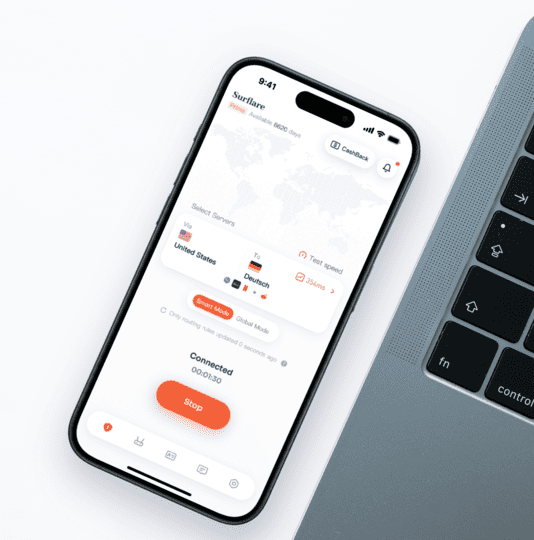
- In addition to privacy-oriented VPNs, there are other functionally positioned VPN services. For example, Surflare VPN offers comprehensive geo-access solutions, supporting streaming unlocking, cross-border e-commerce, AI service access, etc., while also including privacy protection features
- These multifunctional VPN services are suitable for users needing access to geo-restricted content, conducting cross-border e-commerce, or accessing specific regional AI services, with privacy protection levels between free tools and professional privacy VPNs
- Choose the appropriate solution based on actual needs (pure privacy vs. geo-access vs. business use)
Hybrid Solutions:
- Use Edge Secure Network when full VPN protection is not needed (to save VPN traffic)
- Use a professional VPN for full device protection on public WiFi or when handling sensitive information
Conclusion
Edge Secure Network VPN is a real security feature, but it is important to understand its specific scope.
According to technical analysis and official documents, this feature provides browser-level encryption, not system-level VPN protection. This is both its advantage (ease of use, built-in integration) and its limitation (limited protection scope). Users need to understand:
- ✅ It can protect your Edge browsing activities on public WiFi
- ✅ It can prevent ISPs from viewing Edge browsing traffic
- ❌ It cannot protect your entire device
- ❌ It cannot allow you to browse completely anonymously
- ❌ It cannot unlock geo-restricted content
- ⚠️ Its privacy protection scope is limited to browser applications
VPN Selection Framework
Different network tools are designed for different needs:
| Type of Need | Suitable Tool | Representative Services | Features |
|---|---|---|---|
| Basic Browsing Privacy | Browser-level proxy | Edge Secure Network VPN | Only protects the browser, 5GB/month limit |
| Strong Privacy Protection | Privacy-oriented VPN | Mullvad, Proton VPN | Zero logs, audits, anonymity |
| Geo-access and Business Use | Multifunctional VPN | Surflare VPN | Streaming, cross-border e-commerce, AI access, privacy protection |
| Complete Device Protection | System-level VPN | Most professional VPN applications | Protects all applications and device traffic |
Choosing a VPN should be based on actual needs: If you are primarily concerned with strong privacy and anonymity, need zero-log commitments and independent audits, choose a professional privacy VPN; if you need access to geo-restricted content, conduct cross-border e-commerce, or access specific regional services, consider multifunctional VPN services that provide better geographical flexibility while maintaining privacy protection; if you only occasionally browse in Edge, the built-in feature is sufficient.
Reference Resources and Data Sources
Official Documents
- Microsoft Edge Secure Network VPN - Official Features Page
- Microsoft Edge Secure Network VPN - Official Support Page
- Microsoft Edge - Official Security Features Description
- Cloudflare Official Blog: Edge Secure Network VPN Technical Architecture (October 2025)
- Microsoft Privacy Statement
Third-party Analysis and Reporting
- Windows Latest: Privacy researcher debunks Microsoft Edge's free VPN marketing, says it's “NOT a VPN” (February 23, 2026)
- PCWorld: Don't fall for it: Edge's ‘VPN’ feature isn't a true VPN, expert warns
- Windows Report: Privacy Researcher Warns Edge Secure Network May Not Deliver True VPN Protection
- The Win Central: Why Experts Say Microsoft Edge's Free VPN Isn't a Real VPN
- PBX Science: Microsoft Edge's “Free VPN” Is Really Just a Browser Proxy, Security Researcher Warns
- Gizmodo: Best VPNs for Microsoft Edge in 2026 - Analysis of Edge Secure Network Limitations
Technical References
- Wikipedia: VPN (Virtual Private Network) - Technical Definition
- Wikipedia: Proxy Server - Technical Description of Proxy Servers
- Privacy Guides: VPN Assessment and Comparison
Security-related Resources
- YouTube: Video Traffic Consumption Data
- Zoom: Network Usage Data
- Mullvad VPN - Privacy-oriented VPN (Zero-log Policy)
- Proton VPN - Privacy-oriented VPN (Swiss Jurisdiction)
- Surflare VPN - Multifunctional VPN (Streaming, Cross-border E-commerce, AI Access, Privacy Protection)
Key Point: Understanding the difference between the actual functions of technical products and their promotional promises is the foundation for making informed privacy protection decisions.