More and more people are starting to care about "online security," "privacy protection," and "cross-border access." VPNs are no longer just about "bypassing restrictions"; they have become a regular essential tool: connecting to Wi-Fi in cafes, logging into overseas accounts, cross-border working, traveling in different countries... all rely on it.
However, by 2025, there are too many VPN brands on the market: dozens of big names and hundreds of smaller ones. Ordinary users simply do not have the time to try them all.
The goal of this article is simple:
From a global perspective, we will highlight 5 VPNs that are most worth recommending in 2025, clearly explaining their advantages, suitable user groups, and potential shortcomings, allowing you to make choices based on your needs.
Legal Notice: Different countries/regions have different regulations regarding VPNs. Please be sure to understand and comply with local laws and regulations before use.
1. Choosing a VPN in 2025: Understand These 5 Core Indicators First
Before discussing specific brands, let’s start with the conclusion: there is no "absolute strongest" VPN, only VPNs that are more suitable for your usage scenarios. When choosing a VPN, it is recommended to focus on these 5 points:
1. Speed and Stability
- Check the protocol: The mainstream now is the WireGuard series and various proprietary protocols (such as NordLynx, Lightway, etc.), which are generally faster than the older OpenVPN.
- Check server quality: It’s not just about "the number of servers," but about the connection quality, latency, and packet loss in relation to your location.
- For those who frequently watch 4K videos, play games, or work remotely, speed and stability are the top priorities.
2. Privacy and Security
Focus on a few key aspects:
- Does it have a strict no-logs policy and is it audited by a third party?
For example, NordVPN and Proton VPN have repeatedly passed independent no-logs audits. - Company location (jurisdiction)
Proton VPN is headquartered in Switzerland, where privacy laws are relatively friendly and it is not part of common intelligence-sharing alliances. - Does it have advanced features: Kill Switch, DNS/IPv6 leak protection, multi-hop (Double VPN / Secure Core), ad and malicious site blocking, etc.
If you are a privacy-sensitive user (developers, media professionals, etc.), this aspect should take precedence over speed.
3. Server Distribution and Unlocking Capability
- Server distribution: The more countries/regions covered, the richer the available IP options.
- Unlocking capability: Can it reliably access mainstream streaming services (Netflix, Disney+, Hulu, etc.) and local content in various regions?
- Some VPNs specialize in servers optimized for streaming, while others focus more on privacy or cross-border connections.
4. Usability and Multi-Platform Capability
- Is the client easy to use, can beginners connect with one click?
- Does it support multiple platforms: Windows, macOS, Android, iOS, browser extensions, smart TVs, routers, etc.?
- Number of simultaneous connections: Some brands limit to 2-3 devices, while others support more. "Unlimited device connections" is also a major selling point for many VPN providers, especially in scenarios with multiple devices.
5. Price and Cost-Effectiveness
- Some big brands are not cheap, but when combined with long-term plans and promotions, the average cost can be acceptable.
- Emerging brands may have friendlier prices, especially if you value performance indicators like "cross-border access quality" and "dedicated lines."
2. The 5 Most Recommended VPNs Globally in 2025 (Overview)
Based on various third-party evaluations, feature characteristics, and overall performance in 2025, we will focus on the following 5 VPNs in this article:
- NordVPN – Most balanced overall performance, suitable for most ordinary users
- ExpressVPN – Excellent connection quality, easy-to-use client
- Surfshark – High cost-effectiveness, supports unlimited devices
- Proton VPN – Suitable for users who prioritize privacy and compliance
- Surflare VPN – Emerging but focused on cross-border access and dedicated IP (suitable for cross-border e-commerce/overseas individuals)
Next, we will discuss each one.
3. NordVPN: The Most Balanced "All-Rounder"
NordVPN has consistently ranked high on various "best VPN" lists over the past few years, and in 2025, it remains in the top tier of evaluations by most media outlets.
1. Core Features
- Headquartered in Panama, where there are no mandatory data retention laws, combined with a no-logs policy audited multiple times by third parties, making it relatively friendly to privacy.
- Uses its proprietary NordLynx protocol based on WireGuard, which performs well in speed and stability, and is one of the more mature self-developed protocols in the industry.
- Offers security features like Threat Protection Pro, which can block malicious websites, ads, and certain malicious downloads at the system level.
- Has a very large number of servers distributed across more than 100 countries, suitable for accessing regional content and accelerating some cross-border access.
2. Suitable User Groups
- Users who want an "all-in-one" solution: needing speed, privacy, and streaming unlocking capabilities.
- Those looking for a "digital security toolbox": hoping the VPN can also block ads and malicious websites.
3. Possible Shortcomings
- The price is not the lowest, especially if paying monthly, which can be relatively expensive.
- The client has many features, which may take some time for beginners to familiarize themselves with.
If you don’t want to research too much and just want to "buy a mainstream big brand," NordVPN is a relatively safe candidate.
4. ExpressVPN: Stable Connection Quality and Usability
ExpressVPN is an established VPN provider, and many people start their VPN journey with it. In recent years, it has focused on its proprietary protocol Lightway, which performs well in speed and connection reliability.
1. Core Features
- The Lightway protocol has been rewritten in Rust in 2025, which the company claims improves security and maintainability while keeping it lightweight, fast, and better for battery performance.
- Repeatedly rated as having "very stable connection quality" and "user-friendly client," the operational logic across multiple platforms is quite unified, requiring almost no tutorial for beginners.
- Servers cover a large number of countries, with some nodes optimized for streaming, making it friendly for users wanting to watch Netflix, Disney+, etc.
- Supports features like Kill Switch, split tunneling, and ad/malicious site blocking.
2. Suitable User Groups
- Users who prioritize a "smooth experience": wanting a simple client, fast connections, and no hassle with settings.
- People who frequently use multiple platforms and devices: wanting to install it on phones, computers, tablets, and TVs.
3. Possible Shortcomings
- Compared to other brands, ExpressVPN's price is often higher (there may be discounts during major promotions).
- Advanced privacy features (multi-hop, Tor over VPN, etc.) are not as rich as some niche brands that focus heavily on privacy.
If your budget is relatively sufficient and you place a high value on connection experience and usability, ExpressVPN remains a very solid choice in 2025.
5. Surfshark: High Cost-Effectiveness + Supports Unlimited Devices
Surfshark has risen quickly in recent years for a simple reason: it has strong features, is relatively inexpensive, and supports "unlimited device connections."
1. Core Features
- One account can be used on an unlimited number of devices simultaneously, making it very suitable for family sharing or users with many devices.
- Offers a CleanWeb feature that can block ads, trackers, and some malicious websites, providing a cleaner experience when used with browsers or mobile devices.
- Supports common advanced features: multi-hop (Double VPN), obfuscation servers (NoBorders), Kill Switch, split tunneling, etc.
- The number and distribution of servers have been continuously expanding in recent years, now covering over 100 countries.
2. Suitable User Groups
- Budget-sensitive users who do not want to sacrifice too many features.
- Small families or roommates who want to buy a single VPN account for everyone.
- "Heavy users" who want to enable VPN on computers, phones, TVs, tablets, and routers simultaneously.
3. Possible Shortcomings
- While overall performance is good, stability in certain specific scenarios may not match that of top-tier high-priced brands (e.g., in certain countries or certain ISP environments).
- Due to its high cost-effectiveness, the user base may be concentrated on certain nodes, which can lead to slight speed fluctuations during peak times.
If you want to cover all devices on a lower budget, Surfshark is a very worthwhile choice to consider.
6. Proton VPN: Privacy-First "Security Type"
Proton VPN comes from the Proton team that created encrypted email, headquartered in Switzerland, and has always emphasized its privacy advantages and compliance.
1. Core Features
- Headquartered in Switzerland: Switzerland has relatively strict privacy protection laws and is not part of common intelligence-sharing alliances, making it friendly to privacy-conscious users.
- Has a strict no-logs policy and has been audited by third-party security companies, with a recent 2025 no-logs audit report verifying that it does not record identifiable user activity logs.
- Offers advanced features like Secure Core (multi-hop routing), VPN over Tor, port forwarding, and NetShield ad blocking, which are appealing to tech-savvy users or privacy enthusiasts.
- Has a unique selling point: offers a truly usable free plan—ad-free, but with limitations on servers and speed.
2. Suitable User Groups
- Users who are very concerned about privacy and compliance, such as journalists, developers, and remote freelancers.
- Users who want to try for free before deciding whether to purchase a paid plan.
3. Possible Shortcomings
- The free version has noticeable limitations in server selection and speed, making it more suitable for "light use."
- Compared to some VPNs that are extremely optimized for speed, Proton VPN's speed test results under certain protocols may be slightly inferior, making it more suitable for users who are "not in a hurry but need security."
If your core demand is "privacy and compliance," Proton VPN is a very noteworthy option in 2025.
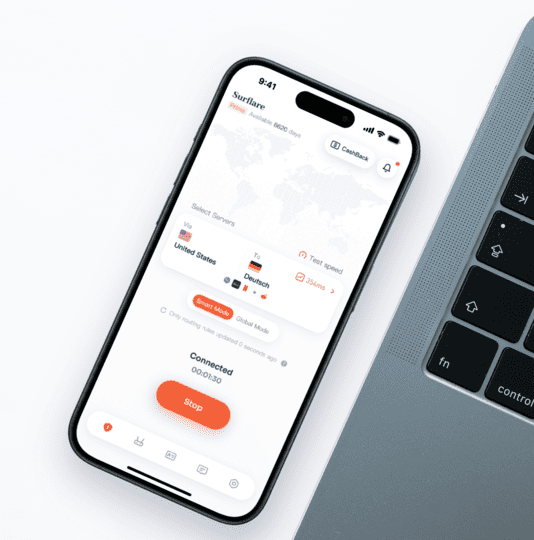
7. Surflare VPN: An Emerging Choice Focused on Cross-Border Access and Dedicated IPs
The previous few are well-known international brands. Here, we will introduce an emerging brand that performs outstandingly in cross-border access, dedicated IPs, and business scenarios: Surflare VPN.
Founded in 2016, Surflare is a technology service company registered in Singapore. Its products have been operating stably for over 8 years and have accumulated rich practical experience in cross-border e-commerce, remote collaboration, and related business scenarios in Southeast Asia.
Note: Surflare focuses on cross-border office and business use. This section will introduce it in terms of "scenarios + pros and cons" to help readers determine if their needs match.
1. Core Features (Understanding by Scenario)
• More Stable Cross-Border Office & Cross-Border E-Commerce
Surflare performs exceptionally well in cross-border access, whether accessing European and American sites from Asia or accessing domestic office systems from overseas, maintaining low jitter and higher stability, suitable for long-term connection work scenarios like video conferencing, remote desktops, and store management.
• Dedicated IPs / Private IPs from Multiple Countries
Supports Dedicated IPs from multiple countries/regions, suitable for scenarios requiring "account cleanliness" such as TikTok Shop, Shopify, Facebook/Google Ads, and cross-border store backends, helping to reduce risk control issues caused by shared nodes.
• Proprietary Obfuscation Protocol + Cross-Border Line Optimization
Multiple enterprise-level cross-border lines combined with Surflare's proprietary obfuscation protocol ensure a high connection success rate even in complex network environments or when cross-border links are prone to fluctuations.
• Service Support Aimed at Work Scenarios
Customer service is more familiar with the specific needs of cross-border sellers, overseas teams, and advertising professionals, able to provide practical usage advice.
2. Suitable User Groups
- Cross-border e-commerce / overseas teams / remote office teams
Need long-term stable access to platform backends, advertising systems, payment systems, and other core businesses. - Users with clear needs for dedicated IPs
Content creators and sellers who want to reduce risk control and improve account stability. - Users who are not completely satisfied with the cross-border stability of big-brand VPNs
Looking to try VPN services that focus on cross-border line optimization.
3. The Biggest Advantage of Surflare VPN
In addition to the basic capabilities mentioned above, Surflare's advantages are more reflected in "stability" and "predictable experience."
Surflare's service strategy tends to maintain a high-quality user base rather than large-scale expansion aimed at the mass market. Since VPN node bandwidth is essentially a shared resource, this restrained service model allows individual users to be allocated more ample bandwidth, maintaining smoother speed performance during both regular and peak times. This stability is particularly crucial for cross-border e-commerce, overseas collaboration, and content creation users who require long-term stable connections.
On a technical level, Surflare uses enterprise-level cross-border dedicated lines, proprietary obfuscation protocols, and provides Smart Routing, which automatically determines whether to use international lines based on applications or domains, balancing speed, account security, and connection reliability. The current policy of no speed or data limits also provides a good experience window for professional users requiring high bandwidth.
In summary: If your usage scenario leans towards cross-border business, requires long-term stability, and has requirements for dedicated IPs or account security, then Surflare is worth considering as a "tool-type VPN," and it is also common to use it alongside top-tier brands.
4. Possible Shortcomings
- International recognition and the number of third-party evaluations are not as high as Nord/Express/Surfshark/Proton, needing more user reputation accumulation.
- The product prioritizes stability, with version iterations being relatively steady, and the update frequency is not as high as that of large consumer-grade VPNs.
8. How to Choose Among These 5 VPNs for Different Usage Scenarios?
It can be simply understood as follows:
- If you want a VPN with balanced overall performance
→ First choice: NordVPN - If you care more about connection experience and a simple, user-friendly client
→ Consider: ExpressVPN - If your budget is limited but you want to cover as many devices as possible
→ Check out: Surfshark (unlimited devices) - If you are very sensitive to privacy compliance and want advanced features like multi-hop and Tor
→ More suitable: Proton VPN - If you are in cross-border e-commerce, overseas teams, and need stable cross-border access and dedicated IPs
→ Focus on evaluating: Surflare VPN
9. Final Advice: First Clarify "What You Want the VPN to Do"
In 2025, VPNs have almost become an "infrastructure-level" tool, but everyone's main purpose for use is different:
- If you are an ordinary user:
Wanting to browse the internet more securely, not being spied on when connecting to public Wi-Fi, and occasionally watching streaming, then choosing big brands like NordVPN, ExpressVPN, or Surfshark is sufficient. - If you are a heavy privacy user:
Placing more emphasis on not leaving traces, friendly legal environments, supporting multi-hop, multi-layer encryption, etc., then Proton VPN would be more suitable. - If you are part of a cross-border e-commerce, overseas startup, or remote team:
Needing stable lines, dedicated IPs, and nodes specifically optimized for certain regions, you can consider VPNs like Surflare that are more focused on "cross-border access optimization."
The order of choosing a VPN can be:
- First, decide your main scenario (security, streaming, cross-border, privacy, work).
- From the above 5 brands, select 2-3 that best match your scenario.
- Utilize the trial period/refund guarantee they offer to personally test for a week:
• Is the speed fast enough?
• Is it stable in your commonly used network environment?
• Is the client user-friendly? - Then decide which one to subscribe to long-term, or consider using two different types of VPNs together (for example: a big brand for daily use + a dedicated line for cross-border work).
Making Cross-Border Access More Stable and Efficient
The stability of cross-border access directly affects your work efficiency.
Surflare provides enterprise-level cross-border lines, smart routing technology, and an experience with no speed or data limits.
If you are engaged in cross-border business or remote team collaboration, you might want to personally test Surflare's performance.
👉 Click to experience Surflare, faster, more stable, and simpler