For many users in mainland China, Taiwan, or living abroad, choosing a truly suitable Japan VPN is often more difficult than expected.
You may have encountered situations where you are using a VPN labeled as "Japan node," yet still cannot watch Netflix Japan; or after successfully connecting, the speed is extremely unstable, with fluctuating latency in Japanese games; or frequently triggering verification when logging in or placing orders on Japanese e-commerce sites, or even being directly restricted from access.
The root of these problems lies not in "whether you are using a VPN," but in whether the VPN you are using is truly suitable for the Japanese network environment.
Therefore, this article does not simply list a few "VPNs that can connect to Japan," but attempts to answer three more critical questions:
- What problems does a Japan VPN actually solve?
- How should one judge whether a VPN is "suitable for Japan"?
- Among mainstream brands and emerging options, which choices are more reasonable in the Japanese context?
1. What is a Japan VPN? Why do many people say "it still doesn't work well"?
From a technical perspective, the essence of a VPN (Virtual Private Network) is to forward your internet traffic to another server through an encrypted tunnel, and then that server accesses the target website.
When you connect to a VPN server located in Japan, your access request appears to external websites as "coming from Japan."
The problem is: "appearing to be" does not equal "actually working well."
1️⃣ Unlocking regional restrictions for media: Why are Japanese platforms particularly "picky about IPs"?
On one hand, the copyright division of local Japanese media content is very detailed, with different platforms and programs often corresponding to specific regional authorization ranges, making platforms more cautious in judging "whether the access source genuinely belongs to Japan." On the other hand, mainstream Japanese streaming platforms (such as Netflix Japan, TVer, ABEMA, U-NEXT) have low tolerance for non-local access in their risk control strategies; once access behavior or IP characteristics deviate from normal local user patterns, it is easier to trigger restrictions.
In this environment, the usage history and sharing degree of the IP become key factors. Many VPNs provide Japanese nodes, but these nodes mostly belong to highly shared data center IPs, which have been repeatedly used by a large number of users and have long been identified and closely monitored by streaming platforms. When the same exit carries too many access requests in a short period, even if the geographical location is correct, it will be judged as an abnormal source.
Therefore, users often encounter situations where a certain VPN's Japanese node can play content normally at the beginning of the connection, but as the number of users increases or the usage time extends, the unlocking capability rapidly declines, ultimately resulting in proxy prompts or failure to load. This phenomenon of "short-term availability, long-term failure" is essentially an inevitable result of shared Japanese IPs in a strict risk control environment.
2️⃣ Japanese games and latency: Geographical distance ≠ network distance
From a map perspective, Japan is not far from China, Taiwan, and South Korea, but in actual use, the network latency when connecting to Japanese servers is often not solely determined by physical distance. For Japanese games that require stable connections, the quality of the VPN line is often more important than the number of nodes. The key factors affecting latency and stability come more from the actual path data takes through the network.
Real cross-border network connections are usually affected by multiple factors, including:
-
The quality and congestion of the local operator's international exit
-
Whether there is queuing and packet loss on cross-border links during peak hours
-
Whether the VPN has specifically optimized routing for Asian users accessing Japan
In an ideal situation, access requests from Asia should enter the Japanese network through relatively direct cross-border paths. However, in reality, many generic VPNs' Japanese nodes are deployed according to the logic of "serving global users," without specific optimization for the Asian direction. This can lead to a non-intuitive result: even if you are connected to a Japanese server, the actual traffic may first be forwarded to transit nodes in other regions before looping back to Japan.
For web browsing, the impact of this detour may not be obvious, but in Japanese games that require real-time performance, the problem is significantly magnified. Additional transit not only increases base latency but also makes it easier to trigger jitter and packet loss during peak periods, resulting in skill delays, screen freezes, or even brief disconnections.
Therefore, the difference in experience for Japanese games often does not depend on "whether there is a Japanese node," but rather on whether there is a more direct and stable network path between your location and the Japanese server. This is also why some VPNs that have undergone routing optimization for the Asian direction provide a noticeably more stable experience in Japanese games, even if speed test data is similar.
3️⃣ Japanese shopping and account access: Risk control is often stricter than you think
In Japanese e-commerce and account systems, the logic of access control goes far beyond "is it a Japanese IP." Whether it's Yahoo Japan, Mercari, Rakuten, or the Japanese App Store, these platforms usually conduct a comprehensive assessment of a series of behaviors and environmental signals in actual risk control, rather than just geographical location itself.
Common judgment dimensions include:
-
Whether the IP switches frequently in a short period
-
Whether there is abnormal concurrency or atypical access rhythm
-
Whether the IP comes from known proxies or highly shared networks
The core goal of this risk control strategy is not to prevent overseas users but to identify access patterns that are clearly inconsistent with normal Japanese user behavior. When a VPN uses heavily shared exit IPs, it is easy to exhibit characteristics such as concentrated requests and highly similar login behaviors within the same time frame, leading the system to classify it as a high-risk source.
Therefore, even if users can normally open the website homepage, they often encounter restrictions during key processes such as logging in, placing orders, making payments, or binding accounts, such as repeated verification, operation failures, or even temporary access freezes. These issues are often not one-time occurrences but can repeatedly arise during long-term use, significantly amplifying the experience and risk for users who need stable management of Japanese accounts.
4️⃣ Network security and privacy: Japan is not a "region where privacy doesn't matter"
Although Japan does not strictly censor internet content like some countries, this does not mean that network privacy issues are unimportant in the Japanese environment. In fact, Japan's network infrastructure is highly developed, and its data analysis and logging capabilities are quite mature, making it easier for users to expose access behavior characteristics without encryption.
In public Wi-Fi, company networks, or campus networks, it is not uncommon for traffic to be recorded, analyzed, or even stored for long periods. For international students, expatriates, or digital nomads, these networks are often high-frequency usage scenarios. If communication is not encrypted, account information, access content, and even work data may face unnecessary exposure risks.
In this case, the role of a VPN is not just to "switch to a Japanese IP," but to reduce visibility during the communication process through an encrypted tunnel and provide a more controllable connection experience in unstable or restricted network environments. For those who need to work or live in the Japanese network environment for a long time, stability and privacy protection are often equally important considerations.
2. How to choose a "truly suitable Japan" VPN?
If you only look at promotional pages, almost all VPNs will emphasize "support for Japanese nodes" or "coverage of Japanese servers." However, in actual use, many users quickly find that: whether there are Japanese nodes and whether it works well are often two different things.
From a real experience perspective, the following indicators truly determine whether a VPN is worth long-term use in the Japanese context.
1️⃣ Number of Japanese nodes ≠ Availability in Japan
Having many nodes does mean theoretically having more switching options, but the premise is that the quality of these nodes is relatively balanced and that the IPs have not been heavily abused.
In Japan, where there is sensitivity to proxies and abnormal access, whether nodes "can be used long-term" is often more important than "how many nodes there are".
If a VPN has a large number of Japanese nodes, but a significant portion of those IPs have been repeatedly identified and flagged by streaming or e-commerce platforms, then users will still need to frequently switch nodes in actual use to barely find a usable exit. In contrast, a Japanese server with fewer nodes but relatively clean IPs and higher stability is more suitable for long-term use.
Therefore, when evaluating a Japan VPN, rather than focusing on "how many servers there are numerically," it is better to focus on whether these nodes can remain usable during peak periods and over consecutive days.
2️⃣ Speed and protocol: Not just peak speed, but also stability
Modern VPNs generally support efficient protocols like WireGuard, which can indeed improve connection efficiency and speed performance under ideal conditions. However, it is important to clarify that protocols can only optimize the transmission method and cannot change the quality of the cross-border network itself.
If a VPN has not undergone targeted routing optimization towards Japan, then even with advanced protocols, traffic may still detour or congest during cross-border processes. In this case, the "maximum speed" shown by speed testing tools is not very meaningful, and users are more likely to encounter packet loss, jitter, or even brief disconnections during peak hours or long-term use.
For users watching streaming media or playing Japanese games, a consistently stable connection experience is often more important than occasionally high speeds. Therefore, when evaluating a Japan VPN, one should pay more attention to its performance stability during peak periods and long-term use, rather than just instantaneous speed test results.
3️⃣ Privacy policies and security mechanisms are not "optional"
In scenarios where VPNs are used in Japan, especially involving account logins, e-commerce operations, or content subscriptions, security mechanisms are not "bonus features," but rather basic prerequisites.
Whether a strict No-Logs policy is enforced directly relates to whether users' access records will be saved or associated; mechanisms like Kill Switch are important safeguards to prevent real IP exposure during network fluctuations or unexpected VPN disconnections.
If a VPN lacks clear explanations or has inadequate implementations in these areas, even if it can access Japanese services normally in the short term, it is more likely to leave hidden risks in terms of account security and privacy during long-term use. Therefore, when choosing a Japan VPN, privacy policies and basic security features should be regarded as "must-meet conditions," rather than optional additional features.
4️⃣ Unlocking ability requires "long-term verification"
For Japan VPNs, "whether it can unlock" is not a one-time issue, but rather a time dimension issue.
If a VPN successfully unlocks Netflix Japan on one day, it does not mean it will remain stable and available in the following weeks or months.
Since Japanese platforms continuously update risk control strategies and dynamically adjust recognition rules for proxy IPs, only those VPNs that consistently invest in node management, IP rotation, and availability maintenance can maintain unlocking capabilities over a longer period. Therefore, real user feedback over a period of time is more reflective of a VPN's reliability in the Japanese context than short-term test screenshots.
| Judgment Dimension | Core Issues to Focus On | Why This Is Critical for the Japanese Context | Common Misunderstandings |
|---|---|---|---|
| Number of Japanese Nodes | Are Japanese nodes long-term usable and is their quality balanced? | Japanese platforms have strict risk control over proxy IPs; a large number of ineffective or flagged nodes will only increase the cost of frequent switching. | Only looking at "how many Japanese servers there are," ignoring whether nodes have been heavily abused. |
| IP Quality and Sharing Degree | Are highly shared data center IPs being used? | Highly shared IPs are more likely to trigger abnormal recognition by streaming media, e-commerce, and account systems. | Thinking "being able to connect means a Japanese local network experience." |
| Routing and Line Optimization | Has there been specific optimization for Asia → Japan? | Unreasonable cross-border paths can lead to detours, increased latency, and instability during peak periods. | Only looking at physical distance, ignoring actual network paths. |
| Speed Performance | Is it stable during peak periods, and is there frequent jitter or packet loss? | Japanese games and streaming media are more afraid of instability than being a bit slow. | Only referencing peak speeds from speed testing software. |
| Protocol Support | Does it support modern protocols like WireGuard? | Advanced protocols help improve efficiency, but the premise is that the lines themselves are reasonable. | Thinking "supporting WireGuard means it must be fast." |
| Unlocking Ability | Can it sustain unlocking over a period of time? | Japanese platforms dynamically update risk control rules; short-term success does not guarantee long-term availability. | Only looking at one-time test screenshots or short-term experiences. |
| Privacy Policy | Is there a clear No-Logs policy in place? | Involving accounts, e-commerce, and subscriptions, logging policies directly affect risks. | Considering privacy policies as "ideals," rather than usage risks. |
| Security Mechanisms | Does it provide basic protections like Kill Switch? | Prevents real IP exposure during network fluctuations. | Thinking "Japan's environment doesn't need these features." |
| Usage Costs | Do you need to frequently switch nodes or troubleshoot repeatedly? | In long-term use, time costs are often more important than price. | Only comparing monthly fees, without considering usage friction. |
| Applicable Scenario Matching | Does it meet your main usage (media / games / accounts / work)? | Different Japanese usage scenarios have significant differences in stability and risk control tolerance. | Trying to use "one VPN to solve all problems." |
3. Recommended Japan VPNs for 2026 (detailed reviews)
Before diving into individual reviews, I want to clarify the "premise of the reviews": The quality of Japan VPNs is not determined by who advertises "more Japanese nodes," but by whether it is long-term stable and usable in high-frequency scenarios in Japan. Therefore, each one below will be evaluated based on the same set of logic: whether its Japanese node resources are sufficient, whether the lines are stable, how adaptable it is to streaming media/e-commerce risk control, and which type of users it is more suitable for — so that when you finish reading, you won't just get "who is better," but "why it is better and who it is suitable for."
1️⃣ NordVPN — A versatile leading choice (but more like a "powerful toolbox," requiring you to choose nodes)
Recommendation Reason
NordVPN's core advantage is not in any single capability, but in its overall mature system: wide node coverage, complete product features, and rapid iteration of protocols and security functions. In other words, it is like a "powerful toolbox" that you can use to solve many problems — but it does not guarantee that "just clicking any Japanese node will be perfect." This is also the typical experience of NordVPN in the Japanese context: the upper limit is high, but stability depends on the specific server quality you connect to.
Number of Japanese Servers & Speed
NordVPN's Japanese nodes are usually quite sufficient, which brings the direct benefit that when certain exits become congested or are flagged by platforms, you often still have room to switch. For the Japanese direction, NordVPN's speed performs well under "normal conditions," especially when you are using it in Taiwan, Hong Kong, or South Korea, often achieving relatively considerable bandwidth. However, it should be emphasized that speed is not a static metric; it is greatly affected by peak congestion, cross-border routing, and exit load. NordVPN is more like providing you with a bunch of Japanese entrances, and you need to find the smoother path during peak periods by switching, rather than automatically hitting the optimal solution every time.
Unlocking Ability (Netflix Japan, etc.)
NordVPN's unlocking ability for Netflix Japan is generally considered strong among mainstream brands, but it often presents a characteristic of "fluctuating availability": some Japanese nodes can open steadily, while others will trigger proxy prompts or fail to load. The reason behind this phenomenon is not mysterious: Japanese streaming media continuously maintains a list of "known proxies/data center IPs," and once the user density of large VPNs is high, it becomes easier to be concentratedly identified. NordVPN's advantage lies in having many nodes and fast switching; its disadvantage is that you may need to spend a few minutes testing several nodes to find the currently usable one.
Suitable User Group
If you are a "rational user" — willing to spend some time understanding features, can accept occasional node switching, and hope to feel more secure in terms of safety and completeness of functions — NordVPN would be a solid choice. It is particularly suitable for users who need to balance multiple destinations (with Japan being just one of them), such as those working across borders or frequently traveling for business.
Pros & Cons
The pros are overall maturity, abundant node resources, and comprehensive functions; the cons are that the experience in the Japanese context relies more on "choosing nodes," and for users pursuing "one-click always usable," psychological expectations need to be adjusted. What you are buying is a strong system, not a promise of "always automatically hitting the optimal Japanese exit."
2️⃣ Surfshark — Cost-effective and multi-device friendly (but stability during peak times in Japan needs to be accepted)
Recommendation Reason
Surfshark's value is very clear: among mainstream brands, it usually offers a more complete experience at a friendlier price and is very friendly for families and teams in multi-device use. Many users choose Surfshark not because it is the "strongest" in the Japanese direction, but because it provides better cost-effectiveness beyond just being "usable": it can unlock, is usable, has simple settings, and has more controllable costs.
Number of Japanese Servers & Speed
Surfshark's Japanese node coverage generally meets daily needs, but it leans towards "generic deployment": when your network environment is good and the usage period is not crowded, the speed may be satisfactory; but during local evenings in Japan or peak cross-border periods in Asia, the experience is more prone to jitter. The logic here is that generic VPNs spread resources across many regions globally rather than optimizing a specific direction (like Japan) to the extreme in terms of line tuning and bandwidth reservation. It can be fast, but not always fast; it can be stable, but not the kind of "long-term stable without worry" stability.
Unlocking Ability (Netflix Japan, etc.)
Surfshark's unlocking performance for Japanese streaming media is usually "possible, but not guaranteed to be smooth every time." When you encounter proxy prompts, switching nodes, clearing browser cookies, or using incognito mode can often solve some problems, but this experience of needing "manual fixes" essentially indicates that it does not have as much leeway in combating risk control. This is not a big issue for occasional viewers; however, if you plan to use Netflix Japan as your main content source long-term, this fluctuation can accumulate into noticeable usage friction.
Suitable User Group
Surfshark is more suitable for budget-sensitive users with multiple devices and diverse needs — for example, families needing to connect phones, computers, and TV boxes simultaneously, or if you need a VPN but Japan is just one of the scenarios. It is also suitable for users who "can accept occasional hassle": you value overall cost-effectiveness rather than pushing stability to the limit.
Pros & Cons
The pros are outstanding price/function ratio and friendly multi-device experience; the cons are that "peak stability" and "risk control resistance" in the Japanese direction are more at a mid-range level. If you have very high requirements for the Japanese experience, Surfshark may not be the most worry-free choice, but it is practical enough for most ordinary users.
3️⃣ ExpressVPN — High-end choice focused on experience (expensive, but worry-free)
Recommendation Reason
ExpressVPN's positioning has always been consistent: it emphasizes "user experience" and "worry-free" rather than making you study a bunch of feature options. For Japan VPNs, this positioning is often very appealing because the most frustrating aspect in the Japanese context is not "whether you can connect," but "whether it can be stable long-term and have fewer issues." ExpressVPN often reduces this friction: open the app, connect to a Japanese node, start using — you rarely need to do complex troubleshooting.
Number of Japanese Servers & Speed
ExpressVPN may not have the most Japanese nodes, but it emphasizes node quality and availability, especially the speed of connection establishment and link stability is usually better. For many users, the perceived difference is that ExpressVPN is less likely to suddenly drop speed or frequently reconnect during peak times. This usually comes from two things: first, it is more mature in network scheduling and load management; second, its line strategy tends to "prefer to keep the experience stable even at a higher cost."
Unlocking Ability (Netflix Japan, etc.)
In terms of Japanese streaming media, ExpressVPN is usually among the more worry-free options, especially for platforms like Netflix Japan with strong risk control, where the success rate is often higher. The key here is not "what magical technology it has," but that it is more willing to continuously invest in "maintaining availability" — when certain IPs are identified, it tends to quickly replace and adjust strategies, resulting in lower failure rates for users. For users, this means spending less time dealing with proxy prompts and more time actually watching content.
Suitable User Group
If you prioritize "worry-free stability," have a relatively ample budget, and Japan is one of your frequently visited destinations (watching Japanese dramas, using Japanese services long-term, frequently switching between Japan and overseas), ExpressVPN is a more stable choice. It is also suitable for users who do not want to study parameters and just want a tool that has "as few problems as possible."
Pros & Cons
The pros are stability, worry-free experience, and strong overall performance; the main con is the price. You can understand it as: you are buying "less hassle time cost." If your usage frequency is not high, you may find it not cost-effective; but if Japan is your high-frequency destination, its premium will be more easily offset by the experience.
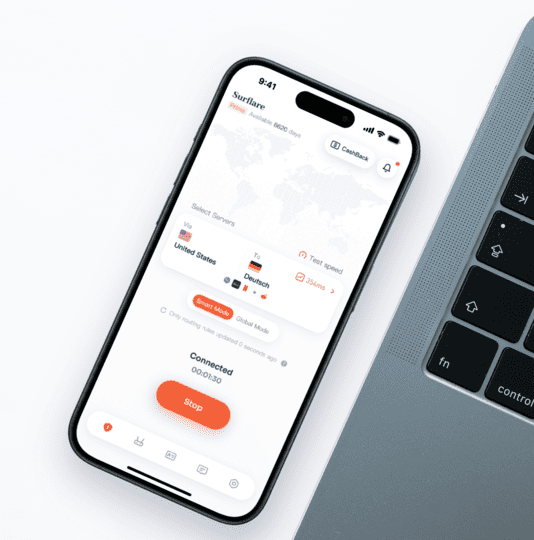
4️⃣ Surflare VPN — A cross-border stable choice for the Japanese scene (dedicated line optimization + native IP)
When evaluating Japan VPNs, most review articles focus on "number of nodes" and "whether it can unlock a certain platform," but in real use, especially for Asian users, these two indicators are not sufficient to explain the differences in long-term experience. Surflare VPN's positioning is not to be a generic VPN covering dozens of countries globally, but rather to conduct more targeted optimizations for line quality and availability around high-frequency cross-border destinations for Asian users, with Japan being one of the key focuses.
Japanese Line Optimization: From "being able to connect" to "long-term stable availability"
For users in China, Taiwan, or Southeast Asia, the most common problem when connecting to Japanese servers is not complete inability to connect, but rather significant latency fluctuations, lag during peak hours, and frequent issues after using for a period. The core reason behind this is often not the protocol or client performance, but whether the cross-border link itself is reasonable.
Surflare's design approach towards Japan is not simply to increase the number of servers but to specifically optimize the performance of the Japanese line. By using high-speed dedicated lines and better cross-border routing strategies, it minimizes unnecessary international detours, making the path for Asian users accessing Japan more direct and controllable. The results of such optimizations may not necessarily be reflected in instantaneous peak values shown by speed testing software, but more in stability during peak periods and continuous usage experience — which is a part that many generic VPNs find difficult to balance.
Native IP and Low Sharing Degree Exit: Why is this particularly important for Japanese accounts?
Japanese streaming media, e-commerce, and service platforms are generally very sensitive to "abnormal access behaviors" in their risk control logic. In addition to geographical location, they also comprehensively judge whether the IP comes from highly shared proxy networks and whether there is frequent concurrent access.
In this context, the "purity" of the IP is often more important than the number of nodes.
The native IPs provided by Surflare (not heavily shared generic exits) are more similar in usage characteristics to ordinary Japanese local network environments. This does not mean "there will be no restrictions," but in long-term use, account logins, shopping, or subscriptions, a lower degree of sharing usually means a lower probability of triggering abnormalities, thereby improving overall availability and stability.
This design approach is more suitable for users who need to use Japanese services long-term rather than frequently switch nodes. Instead of searching for "currently usable nodes" every day, it is better to continuously use on the same relatively stable exit; these are two completely different usage logics.
Suitable User Group: Who can better appreciate Surflare's advantages?
Combining the above features, Surflare is more suitable for the following types of users in the Japanese context:
- Cross-border workers or remote collaborators: Need long-term stable access to Japanese systems, meetings, or internal tools, and are very sensitive to short-term disconnections and jitter.
- Long-term users of Japanese accounts: Including Japanese e-commerce, app stores, content platforms, etc., where stability and account risk control take precedence over "number of nodes."
- Japanese game players in Asia: More concerned about whether latency is stable and whether there are frequent packet losses than peak speed.
The common characteristic of these users is: they do not pursue frequent switching or extreme speed testing, but rather hope to reduce unpredictable issues.
Objective Boundary: Surflare is not "the only answer for all Japanese needs"
It is important to view objectively that Surflare's advantages mainly manifest in scenarios where Japan is a high-frequency destination. If your usage needs lean more towards frequently switching between multiple countries globally or relying on unlocking coverage for certain niche platforms, traditional international brands still have advantages in breadth and ecological accumulation.
However, if your question is: "I need a VPN that is long-term stable in the Japanese direction, requires less hassle, and is suitable for Asian cross-border use," then Surflare's design orientation clearly aligns more closely with this real need.
Rather than saying Surflare excels in "the number of Japanese nodes," it is more accurate to say it focuses more on the stability and sustainable availability of Japanese lines in Asian cross-border scenarios, which is what many long-term users truly care about.
4. Free and alternative options: Is Japan VPN Gate or free VPN worth trying?
Before discussing paid VPNs, many readers will have a practical question:
"Are there any free Japan VPNs? Can I try it first?"
From a technical perspective, the answer is: you can try, but you need to be clear about the cost.
The actual situation of Japan VPN Gate
VPN Gate is a free VPN network derived from a research project at Tsukuba University in Japan, with nodes provided by volunteers, theoretically allowing access to Japanese IPs. This is also why it is often mentioned in search results for "Japan VPN."
However, from the perspective of long-term and stable use, it has several structural issues:
First, the stability of nodes is extremely low.
VPN Gate's servers are not commercially deployed, and the online and offline status of nodes is highly uncertain. A Japanese node you can use today may disappear tomorrow; even if you can connect successfully, it is easy to experience severe speed drops due to high load.
Second, the risk of IP control is uncontrollable.
Free nodes are often shared by a large number of users, and Japanese platforms (especially streaming media and e-commerce) are extremely sensitive to abnormal concurrency and shared exits. This means that even if you successfully connect to VPN Gate, Japanese websites may very likely refuse service, trigger verification codes, or even restrict account operations.
Third, privacy and security are not suitable for sensitive scenarios.
VPN Gate explicitly states its research nature, meaning it is not suitable for account logins, e-commerce operations, or long-term privacy protection. For users who just want to temporarily verify "whether a certain page can be opened," it can serve as a one-time tool; but it should not be regarded as a long-term solution.
Who can consider free Japan VPNs?
If your needs fall into one of the following situations, free options can serve as "backup tools":
- Temporarily viewing content on a certain Japanese webpage
- Short-term verification of whether Japanese IPs are accessible
- No requirements for stability, speed, and account security
However, as long as your needs involve long-term use, account logins, content consumption, or cross-border work, free VPNs are not just "a bit worse in experience," but carry significantly higher risks.
5. Practical tips for using Japan VPN (Why does it sometimes connect but not work well?)
Even if you choose a relatively reliable VPN, the correct usage method is still very important in the Japanese context. Many problems of "VPN not working well" actually do not entirely stem from the VPN itself, but from usage details.
1️⃣ The correct order for connecting to Japanese servers
A commonly overlooked detail is:
Do not switch VPNs while already logged into a Japanese platform.
The reason is that Japanese platforms will record your access behavior characteristics. If you log in first with a non-Japanese IP and then suddenly switch to a Japanese IP, it is easy to trigger risk control.
A more prudent process is:
- Disconnect all VPNs first
- Clear browser cookies or use incognito mode
- Connect to a Japanese VPN node
- Then access or log in to the target website
This order has a significantly higher success rate in streaming media, e-commerce, and account services.
2️⃣ Why is "switching nodes" sometimes more important than "switching VPNs"?
For services like NordVPN and Surfshark with a large number of nodes, the status differences between different Japanese servers can be very significant.
When you encounter slow loading or unlocking failures, directly switching Japanese nodes is often more effective than repeatedly refreshing the page.
But this also explains why some users feel these VPNs are "not worry-free" — you cannot automatically connect to the optimal exit every time.
3️⃣ Why is stability more important than "peak speed"?
In Japanese games or when watching Japanese streaming media for long periods, what truly affects the experience is not the highest speed shown by speed testing software, but:
- Whether there are frequent disconnections
- Whether there are sudden high latencies
- Whether there is significant degradation during peak periods
This is also why some users feel "overall smoother" after switching to VPNs that have undergone special optimization for Japanese lines, even if the speed test values do not change much.
6. Common questions about Japan VPN (FAQ)
Is it legal to use a VPN in Japan or to use a Japan VPN?
Using a VPN in Japan is legal. VPNs are considered legal network security and privacy tools, widely used for encrypting communications for businesses and individuals.
However, it is important to note that VPNs cannot be used for illegal purposes, which is unrelated to whether you are using a VPN.
Will Japanese platforms block VPNs?
Japanese streaming media and e-commerce platforms do not "block VPNs," but rather restrict IPs identified as proxies or abnormal.
This is also why "whether it is a native, pure Japanese IP" and "whether there is excessive sharing" directly affect availability.
What to do if the speed is slow?
If the speed is noticeably slow, prioritize checking the following points:
- Are you using it during local peak hours in Japan?
- Are you connected to a node that is overloaded?
- Is there packet loss in the local network?
Under these same conditions, whether a more optimal route and more stable dedicated line to Japan is used will become the key factor determining the experience.
Can free VPNs be used long-term?
From a technical and risk control perspective, it is not recommended.
The biggest problem with free VPNs is not "slow," but rather unpredictable — you cannot control when it will fail, when it will be blocked, or when it will affect account security.
7. Conclusion: How to choose a Japan VPN based on your needs?
If you only occasionally visit Japanese websites, any mainstream VPN or even free options may be "barely usable."
But if your needs are closer to the following categories:
- Long-term viewing of Netflix Japan, TVer, and other content
- Stably playing Japanese games, reducing latency fluctuations
- Frequent use of Japanese accounts, e-commerce, and service platforms
- Stable access to Japanese networks from China, Taiwan, or Southeast Asia
Then what you really need to consider is not "who is the most famous," but:
Who has optimized the Japanese lines more closely for Asian users,
who can reduce risk control, disconnections, and repeated hassles during long-term use.
From this perspective:
- ExpressVPN is more suitable for users pursuing ultimate worry-free experience with a sufficient budget
- NordVPN is suitable for function-oriented rational users who are willing to choose nodes themselves
- Surfshark is suitable for budget-sensitive users with multiple devices and diverse needs
- Surflare VPN is more suitable for users who prioritize cross-border stability, dedicated line quality, and account security with Japan as a high-frequency destination
Choosing a Japan VPN is essentially not about selecting "the fastest one,"
but about selecting a solution with the least problems and lowest risks during your actual usage cycle.