Datacenter IP vs Residential IP: Complete Comparison & Guide

If you’re considering purchasing an IP address, you need to answer two key questions: First, should you buy a dedicated IP or a shared IP? Second, should you choose a Datacenter IP or a Residential IP? This article will help you understand these distinctions and make the right choice based on your specific needs. Remember: choosing a dedicated IP is more important than choosing the IP type itself.

Summarize the content with AI:

No matter whether you are coming to China for business, travel, studying abroad, or long-term work, you will immediately discover a reality upon arrival: the Google, WhatsApp, Instagram, and YouTube that you rely on daily are all inaccessible directly in mainland China.

This is not a network failure, but rather a result of China's unique network environment. For someone used to the global internet, a reliable VPN is not a "bonus," but rather the infrastructure necessary to maintain normal work and life in China.

The problem is that many people only realize after actually using a VPN that even well-known VPNs may experience connection issues, frequent disconnections, sudden drops in speed, and even a noticeable increase in account verification attempts. These issues are not occasional; they are determined by China's special network management mechanisms.

Therefore, when evaluating whether a VPN is suitable for use in China, one cannot only look at the promotional page's "speed" or "number of servers," but must also consider interference resistance, long-term stability, network concealment, and real-world usage scenarios.

This article is specifically written for overseas users who are about to travel to or are already in China. It systematically analyzes the key factors affecting VPN availability in mainland China's network environment, starting from the underlying logic, and provides an in-depth comparison of the following three VPNs that are still widely discussed in 2026:

  • ExpressVPN
  • NordVPN
  • Surflare VPN

This article does not conclude with "which is the best," but rather helps you understand: what kind of VPN is more likely to be usable in the long term in China, and how you should make choices based on your own usage needs.

1. How is the network environment in China different from what you are used to?

If you come from Europe, America, Southeast Asia, or other regions, you may have never thought that "opening Google" requires additional tools. However, in mainland China, the network environment has an independent management system with strong control over cross-border traffic. This means that the network tools you use freely overseas may be completely unusable once you enter China.

The common technical means of this management system include:

  • IP address restrictions: Internet service providers (ISPs) in China restrict access to certain foreign IP addresses, preventing users from establishing communication when attempting to connect to these addresses.
  • DNS-level intervention: By adjusting DNS resolution, user domain requests are redirected to incorrect addresses, preventing users from reaching their target websites.
  • Deep Packet Inspection (DPI): This is one of the most critical factors affecting VPN availability. DPI can analyze the characteristics and traffic behavior patterns of data packets, identifying encrypted tunnel connections and intervening—this includes throttling, connection resets, or even outright interruptions.
  • Keyword filtering: Scanning and filtering content in search engines, social platforms, and instant messaging based on keywords.

Because the network management mechanism is so layered, ordinary VPN protocols (such as standard OpenVPN, WireGuard) often struggle to be used stably in China. A VPN that can remain usable must possess protocol obfuscation or traffic disguise capabilities, making its traffic "look like non-VPN traffic" in front of DPI.

2. What tools and services will you be unable to use in China?

Before you board your flight to China, please confirm: the following platforms and services that you use daily will all be inaccessible directly in mainland China:

Social and Communication

  • Facebook / Messenger
  • Instagram
  • X (formerly Twitter)
  • WhatsApp
  • Snapchat
  • Telegram
  • Line

Work and Productivity

  • Google Suite (Search/Gmail/Drive/Docs/Maps)
  • Notion
  • Slack
  • Dropbox
  • OneDrive (partially restricted)
  • ChatGPT / Claude and other AI tools

Media and Entertainment

  • YouTube
  • Netflix
  • Spotify
  • Twitch
  • Wikipedia
  • BBC / CNN / NYT and other international news

For those who need to work remotely, manage overseas businesses, or keep in touch with family and friends, losing these tools means work interruptions, communication blockages, and even inconveniences in daily life. This is why preparing a reliable VPN before traveling to China is the most overlooked step in travel preparation.

3. What does "a good VPN" really mean in China?

Many review articles consider "speed" and "unblocking streaming" as core metrics, but in China, the primary metrics must be connectivity and resistance to identification. More accurately, a VPN is considered "usable" in China if it meets the following three layers of meaning:

First Layer: Can a successful connection be established (Connectivity)

In China's network environment, the primary standard for evaluating a VPN is not speed, but rather whether it can successfully complete the connection. Many VPNs are blocked during the initial connection phase, manifesting as long periods stuck on "connecting," or quickly disconnecting after briefly showing a successful connection.

From a user perspective, this means: after clicking the connect button, whether the VPN can complete the handshake within a reasonable time and successfully send traffic out of the country. In China, this is not a given. Due to the network management system's ability to identify and intervene in certain VPN protocol characteristics, known server IPs, and abnormal traffic patterns, once a connection attempt is deemed high risk, it may trigger a block or reset, preventing the connection from being established.

Second Layer: Can it maintain long-term stability (Stability)

A successful connection does not equate to "usable." What truly affects the user experience is whether the connection can remain stable during actual use. Specifically:

  • Whether it frequently disconnects during use
  • Whether it is noticeably unstable during peak hours
  • Whether constant node switching is required to barely maintain the connection

This instability is often not merely a bandwidth issue, but is related to line quality, degree of congestion at the exit, and whether the traffic continues to be interfered with during transmission. For users who need long-term access to overseas services, such as remote work, video conferencing with headquarters, or managing overseas social media accounts, frequent interruptions not only affect efficiency but also increase the risk of account anomalies.

Therefore, when evaluating a VPN in the Chinese environment, stability is more valuable than peak speed. A truly "usable" VPN should maintain a relatively stable connection during common usage periods, rather than relying on constant node switching to maintain basic usability.

Third Layer: Does it have sufficient concealment (Stealth / Risk Control)

In addition to connectivity and stability, the third key factor in the VPN experience in China is whether the traffic is sufficiently concealed. If the communication characteristics of the VPN are too obvious, even if a connection is successfully established, it is more likely to encounter throttling, connection resets, or be forced to frequently re-verify.

VPNs with insufficient concealment are more likely to experience the following issues:

  • Network throttling or resets
  • Frequent CAPTCHA triggers on websites
  • Abnormal verification for social or advertising accounts

These phenomena are often not issues with the account itself, but rather the result of the network exit environment and traffic characteristics triggering additional risk control judgments by the platform.

In the Chinese environment, VPNs with obfuscation or disguise capabilities are more likely to blend their traffic into normal network communication, thus reducing the probability of being identified and interfered with. For those who wish to use a VPN continuously and stably during their time in China, concealment is not optional but a crucial component of overall experience quality.

In summary, a VPN that is truly suitable for use in China must meet standards in connectivity, stability, and concealment simultaneously.

4. Why does the same VPN work "well sometimes and poorly at other times" in China?

Public information and a wealth of user experiences point to one fact: China's network management strategies are not static but dynamically adjusted. For users, this dynamism manifests in three aspects:

  1. Protocol feature identification and intervention: When traffic patterns resemble certain typical VPN protocol features, they may be throttled, connections reset, or directly blocked.
  2. Cyclical failure of IPs and lines: Some exit IPs may be flagged or experience quality degradation, leading to "it worked yesterday, but not today."
  3. Regional and operator differences: The same service may perform differently in different provinces or cities and under different broadband/mobile networks, as differences in network exits, routing strategies, and local policies can affect handshake success rates and stability.

This is why VPNs that are "usable in China" often emphasize some form of obfuscation: making VPN traffic appear non-VPN to reduce the likelihood of being identified. For example, NordVPN clearly outlines the steps to enable "Obfuscated servers" in its official support documentation and notes that obfuscation should be enabled after switching to OpenVPN (UDP/TCP).

If you only look at "number of servers" or "peak bandwidth" while ignoring these mechanisms for restricted networks, the real experience after arriving in China may often fall short.

5. Can free VPNs work in China?

The short answer is: almost not at all.

Free VPNs face issues in China that go far beyond just being "slow." China's DPI system can easily identify and block basic encryption protocols, while free VPNs typically do not invest resources in developing obfuscation technology or maintaining usable lines. This means their connections will almost immediately fail in mainland China.

In addition, free VPNs also carry the following risks:

  • Extremely unstable connections: Frequent disconnections without Kill Switch protection, exposing your real IP when disconnected.
  • High privacy risks: Some free VPNs profit by collecting and selling user data, which is particularly concerning in China's network environment.
  • Very slow speeds: Even if occasionally connected, low encryption levels and high server loads result in practical usability close to zero.
  • No customer support: When connection issues arise, there is no one to help troubleshoot.

In China, VPNs are a classic case of "you get what you pay for." A reliable paid VPN may cost as little as a cup of coffee per month, but it can help you avoid the risks of losing internet access, data leaks, or being unable to work at critical moments.

6. Choosing a VPN suitable for use in China in 2026: 6 core evaluation criteria

Rule A: Prioritize whether the "obfuscation/disguise capability" is mature and user-friendly

In China, obfuscation is not just an added bonus but a "primary capability" that determines whether you can connect. You should pay attention to:

  • Whether there is a clear obfuscation entry point (switch/mode/dedicated servers)
  • Whether complex manual configuration is required
  • Whether it is also usable on mobile (many people's real pain point is on their phones)

Rule B: Look at "operation and response speed," not just technical jargon

Network restrictions are dynamic, and what often makes a difference is whether the service provider can continuously update lines, quickly replace failed resources, and keep the client usable. Big brands have advantages in resources and teams but may also experience congestion due to a large user base; smaller, focused services may be more stable if their line strategies are more aligned with the Chinese environment.

Rule C: Look at "node selection strategy," not just the total number of nodes

When using a VPN in China, what you need more is regions that are closer to China, have smoother routing, and lower latency (usually Hong Kong, Macau, Taiwan, Japan, Singapore, South Korea, etc.) and "a set of lines with higher availability." Even if there are many nodes, if most of them cannot connect in China, the numbers are not meaningful.

Rule D: Look at "client experience": whether it allows quick protocol switching, line switching, and retains a list of usable nodes

During your time in China, you will likely need to switch between different networks (hotel Wi-Fi/company network/mobile data/cafe). Whether you can quickly adjust will determine whether you face "10 seconds to fix" or "half an hour of hassle" when encountering issues.

Rule E: Privacy and transparency must have a baseline, but don't be misled by "absolute security" marketing

In the Chinese environment, many people's more realistic demands are: stable access to overseas services + not easily leaking real IP. You should ensure at least: a Kill Switch, DNS/IPv6 leak protection, and clear privacy policies with audit/transparency information (the more public, the better).

Rule F: Ensure there is a refund mechanism and a feasible purchase/download path

Because "usable today" does not equal "usable in the city you arrive in." Refund mechanisms and trial policies are crucial for users coming to China. Terms may vary slightly by region, so check before purchasing.

7. Essential preparations before departure: Your China VPN checklist

The biggest mistake many people make is starting to install a VPN only after arriving in China. At that point, you will find that most VPN official websites are inaccessible, making downloading and registration extremely difficult. The following preparations should be completed before boarding:

  1. Complete purchase and registration in the departure country: Choose your VPN service, complete account registration, and subscription payment.
  2. Install the client on all devices: Phones, laptops, tablets—every device you plan to use in China should have the VPN app installed in advance.
  3. Complete initial login and connection tests: Ensure that the client can log in and connect normally, avoiding the awkward situation of needing email verification only to find Gmail is inaccessible after arriving in China.
  4. Enable obfuscation/restricted network mode: Depending on your chosen VPN, set the protocol to obfuscation mode in advance (such as NordVPN's Obfuscated servers).
  5. Record 2–3 usable nodes: Test and note the best-performing servers in Asia (usually Hong Kong, Japan, Singapore) to use first when in China.
  6. Save offline troubleshooting guides: Save screenshots of the VPN's troubleshooting documentation or support pages locally, as you may not be able to access these help pages once in China.
  7. Prepare a backup VPN: In China, no VPN guarantees 100% availability at all times. Having a backup plan (even a trial from a different brand) is a respect for the network reality.

These preparations only take 15–20 minutes but can save you hours of hassle after arriving in China.

8. Comparative analysis of 3 VPNs in the Chinese network environment in 2026

Note: The following analysis is based on publicly available information, product mechanism descriptions, and common user scenarios. However, please understand that availability in China is highly regional and time-sensitive, and no list should be regarded as a permanent conclusion. Ultimately, "real-world testing in your network environment" should be the basis for decision-making.

1. ExpressVPN: Known for "ease of use and overall completeness"

ExpressVPN has typical advantages in its mature client, low entry cost, and overall experience that is relatively "hassle-free." It emphasizes the Lightway protocol, which is a self-developed protocol route optimized for speed and stability, and the official has long promoted and updated its connection reliability.

For first-time visitors to China who are not very familiar with technical settings, ExpressVPN is often a reassuring starting point:

  • High requirements for stability and ease of use, without wanting to repeatedly research parameters
  • Cross-device use (phone + computer + router) and hoping for a consistent experience

However, you need to have more realistic expectations: its availability in China will also be affected by regional and ISP factors, and it does not mean "once purchased, it will always be stable." Some usage guideline articles aimed at 2026 still emphasize "preparing and setting things up correctly," indicating that there is no zero-threshold for using it in China.

More suitable scenarios

  • Short business trips/travel, hoping to get started quickly after installation
  • Families or teams wanting to maintain a unified experience across multiple devices
  • Need for good customer support and product completeness

Possible drawbacks

  • Prices are usually in the top tier
  • When encountering connection instability, user-adjustable parameters are relatively limited (which may not be an advantage for those who "like to tinker")

Practical suggestions

  • Prepare 2–3 usable lines from commonly used regions (e.g., Hong Kong/Japan/Singapore) and record them
  • If instability occurs, prioritize switching protocols/lines rather than repeatedly clicking "reconnect"
  • Utilize its 30-day refund guarantee to fully test after arriving in China

2. NordVPN: Complete functionality system, obfuscation capability relies on correct settings

NordVPN has strong overall capabilities in the global market, especially in security features, product ecosystem, and "user-controllable" settings. Its key point for availability in China is: obfuscation and specific protocol combinations. NordVPN's official support documentation clearly outlines the steps to enable obfuscation and notes that you need to switch the protocol to OpenVPN (UDP/TCP) before enabling "Obfuscation" and connecting to "Obfuscated servers."

This means NordVPN's strategy is more like "giving you a toolbox": you can improve your success rate in restricted networks through correct settings, but this may make it less intuitive for newcomers compared to some "one-click modes."

Different media have varying descriptions of its performance in China: some articles emphasize that it can still be one of the usable options in China, while others warn that it may experience intermittent availability, require technical settings, and results may vary by region. Such differences are not surprising, reflecting the regional volatility of China's network environment.

Recommended setup steps for NordVPN in China:

  1. Open the NordVPN client and go to "Settings"
  2. In the VPN Protocol option, switch the protocol to OpenVPN (UDP or TCP)
  3. Enable the "Obfuscated servers" option
  4. Select a node from the Obfuscated category in the server list to connect

More suitable scenarios

  • Need for stronger security feature combinations (e.g., double VPN, threat protection, etc.)
  • Willing to make some setting optimizations for a higher probability of availability
  • Concerned about balancing "daily privacy protection + availability in the Chinese environment"

Possible drawbacks

  • For newcomers, "why do I need to switch to OpenVPN to enable obfuscation" may increase the understanding cost
  • Performance may vary more under different regional networks, requiring more frequent "finding the right line"

Practical suggestions

  • Consider "obfuscated servers + OpenVPN" as the preferred combination in the Chinese environment, and learn to switch quickly
  • It is recommended to upgrade the client to the latest version before departure and keep a local record of usable lines
  • If you value "less hassle," NordVPN may require you to invest a bit more learning cost

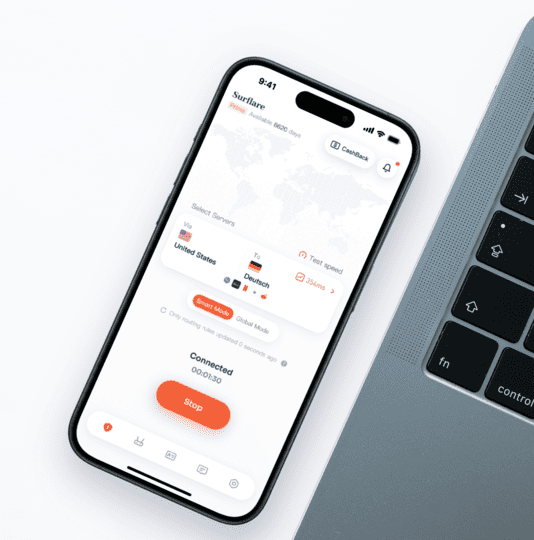
3. Surflare VPN: A stable connection solution for long-term expatriates in China

In the Chinese network environment, the VPN experience often does not depend on a single speed test or the number of features, but rather on whether it can maintain a sustained, stable, and predictable connection state under complex network conditions. Surflare VPN is designed around this long-term usage need, emphasizing connection continuity and controllability of the exit environment.

In terms of connection, Surflare uses a self-developed high-concealment communication protocol, focusing on reducing the recognizability of traffic characteristics, thus improving the success rate of establishing connections and staying online in mainland China's network environment. This design does not rely on complex manual configurations but prioritizes stable connections in common usage scenarios.

In terms of node and line strategies, Surflare does not pursue expansion in the number of nodes but concentrates resources in areas frequently used by users, including Japan, Southeast Asia, and North America, and optimizes dedicated lines for these paths. By using enterprise-level dedicated nodes and a more controllable exit structure, it reduces the risk of instability caused by line congestion during peak periods.

To address users' actual situations of switching between different network environments, Surflare provides an intelligent routing strategy based on application dimensions (Smart Routing), allowing different application traffic to choose more suitable paths based on demand, avoiding the uncertainty brought by concentrating all traffic on a single exit. This approach is more aligned with continuous scenarios such as remote work and multi-platform use, rather than short-term access needs.

In terms of operational strategies, Surflare adopts a relatively restrained expansion model to avoid bandwidth competition issues caused by rapid user growth. A more stable user density helps maintain a more consistent connection quality in actual use, which aligns better with users' expectations for long-term stable experiences.

Overall, Surflare VPN is more suitable as a tool-oriented VPN solution for continuous cross-border usage needs. It does not rely on parameter stacking or marketing labels for success but aims to reduce uncertainty in long-term usage processes in mainland China's dynamic network environment through a combination of protocol concealment, line selection, and usage strategies.

If you are a long-term expatriate in China, a remote worker, or need to continuously manage overseas businesses, Surflare VPN's design philosophy will better meet your daily usage needs—focusing more on connection continuity and exit environment stability rather than emphasizing peak speed.

More suitable scenarios

  • Long-term work or life in China, with a greater emphasis on "long-term stable online"
  • Wishing to reduce frequent node switching and minimize account anomalies
  • Needing clearer line strategies and a usage experience closer to workflows

Potential drawbacks

  • Compared to international giants, there may be less publicly available third-party evaluations and historical reputation accumulation
  • Usability in different regions still needs to be verified through real tests and requires continuous iteration to cope with dynamic network changes

Practical suggestions

  • If you plan to stay in China long-term, it is recommended to extend the evaluation period and test with real workflows
  • Keep at least one major brand as a backup (this is not distrust of any service but a respect for the reality of China's network)

9. Key points for use and troubleshooting after arriving in China

In China's network environment, the actual experience of using a VPN often depends on the usage method, not just the brand itself. The following points focus on significantly reducing usage risks and establishing long-term operational habits.

  • Prepare usable clients and login status in advance

Complete client installation and account login during relatively normal network periods, and retain usable installation methods to avoid falling into a passive state where you cannot download or verify when connections are restricted.

  • Fix 2–3 stable exits, rather than frequently switching temporarily

The availability differences among different exit regions are significant; screening and using a few stable nodes long-term is usually more reliable than repeatedly trying many nodes.

  • Prioritize switching protocols or modes rather than repeatedly reconnecting

When connection issues occur, reasonably switching protocols or restricted network modes is often easier to restore availability than repeatedly reconnecting with the same configuration.

  • Reduce drastic regional jumps in a short time

Frequent changes of countries or regional exits not only reduce stability but may also increase the probability of security verification on some platforms.

  • Focus on disconnection and reconnection costs, rather than single speed test results

In mainland China, whether the connection is stable and whether reconnections are swift usually reflect the real user experience better than speed test numbers.

  • Ensure the Kill Switch is always on

The Kill Switch (network lock/disconnection protection) can automatically cut off your network access when the VPN connection unexpectedly drops, preventing your real IP and browsing activity from being exposed in the moment of disconnection. In China's network environment, VPN disconnections are the norm rather than the exception, so this feature should be viewed as essential rather than optional.

10. FAQ: The questions you are most likely to ask before coming to China

Q1: Is it legal to use a VPN in China?

This question is often described as a "gray area." China requires VPN services to be approved by relevant departments to operate, and unapproved VPN services are restricted. However, the relevant regulations mainly target enterprises and service providers, and the enforcement on individual users varies by region and time. NordVPN's public articles also mention similar descriptions and remind users to understand the associated risks.

For individual users, what is more important is: you need to assess compliance risks yourself and abide by local laws and regulations. Maintaining a low profile and exercising common-sense caution while using is a wise approach.

Q2: Why do my friends say it works, but I can't connect when I arrive in China?

Because the city, operator, and network type (hotel Wi-Fi/mobile data/company network) you are in differ from theirs. More importantly, the network management strategies themselves are dynamic, so the "availability of the same VPN" can vary over time and space. In actual tests, the performance of the same VPN may differ dramatically across different ISPs (such as China Unicom, China Telecom, China Mobile).

Q3: Is it enough to buy just one VPN?

In the Chinese environment, a more prudent approach is "primary + backup." Especially if you have hard requirements for remote work or study, a backup plan can significantly reduce disconnection risks. Most quality VPNs offer a 30-day refund guarantee, so you can try two at the same time and ultimately keep the combination that best suits your network environment.

Q4: Why can I use it during the day, but it becomes very unstable at night?

In mainland China, the availability of VPNs is often affected by the time of day. Evening peak hours (usually from 19:00 to 23:00) see concentrated network traffic, and some exit lines are more likely to experience congestion, leading to decreased connection success rates or stability. This phenomenon does not necessarily mean the service has failed; it is a result of changing network conditions.

Q5: The VPN shows it is connected, but web pages load slowly or do not open?

This situation is not uncommon in China. A VPN showing "connected" only indicates that the tunnel has been successfully established, but the actual access experience still depends on the quality of the exit line, routing path, and current network load. If the exit line itself is congested or restricted, access speed and stability may still be significantly affected. At this point, you should try switching to other server nodes or changing protocols.

Q6: Will frequently switching nodes affect my account security?

When using platforms involving account systems (such as social media, e-commerce backends, or work emails), frequently changing exit regions or IPs in a short time may increase the probability of triggering security verifications. This is not necessarily an account anomaly but a normal risk control response from the platform to changes in the login environment. Therefore, when conditions allow, maintaining a relatively fixed usage environment is usually more conducive to long-term stable use.

Q7: What should I do if I arrive in China and haven't installed a VPN?

This is a dilemma many travelers face. Since most VPN official websites are inaccessible in China, you may not be able to directly download the client or complete registration. If you are already in China, you can try the following methods: contact the VPN's customer service (some brands provide mirror sites or alternative download links), ask family or friends to send the installation package from abroad, or check if you can obtain it through app stores. However, the best practice is always to complete all preparations before departure.

Q8: Will a VPN affect my internet speed?

Yes. All VPNs will incur a certain degree of speed loss due to encryption and routing detours, which is normal. In China, due to the additional obfuscation processing and the bottlenecks of international lines, speed reductions may be more pronounced. Choosing servers that are closest to China and have good line quality (such as Hong Kong, Japan, Singapore nodes) can help reduce latency and speed loss to some extent.

Conclusion: Being prepared is more important than pursuing "the best ranking"

Choosing a VPN before coming to China is essentially about preparing a set of tools to cope with dynamic network changes. ExpressVPN and NordVPN, as international big brands, each have mature mechanisms and ecosystems; Surflare VPN, as the brand discussed in this article, we recommend you use "long-term stable scenarios" as the metrics for practical comparisons, rather than just looking at a single speed test or a recommendation phrase.

Regardless of which VPN you ultimately choose, remember these core principles: install before departure, enable obfuscation mode, fix a few usable nodes, and keep a backup plan. Those who are prepared in the Chinese network environment are far more composed than those who start looking for solutions only after arriving.

Ultimately, the VPN that is most suitable for you is often the one that remains stable after being verified through real usage in your actual network environment.

Do you value long-term stable usage experience more?

Learn about Surflare VPN – easy to use, secure, and stable, an essential cross-border connection tool for coming to China.

Try Surflare VPN